
If You Have A Hammer, Then Everything Needs To Maximize Profit
What is Profit? How Does It Shape Our World?

Table of Contents
I want to talk about tools. Many things in life are just tools that people utilize. Some tools are inherently good, some are inherently bad, and some are a bit of both. Typically when people talk about money they talk about capital, deploying capital, and productive capital. The main tool of capitalism is capital.
I want to talk about a different idea. Capital is a tool and its goal is to achieve increasing Profits. But I want to think about Profits as the tool and not just Capital. I think that if we start to think of Profit[1] as a tool instead of capital, then we can see how Profit is used to prioritize capital. Then I think we start to see the consequences of the Profit motive in the world.
Tools
A hammer is a tool used for putting nails into studs to build a home. It's used for shaping things like metal into something that we may need. Hammers can be weaponized as well. Knives and cutlery are the same. Used to cut meat and vegetables but also can be used for self-defense and murder.
I bring up those examples because there is ambiguity in a tool. Context matters and history matters in how a tool is used. A tool could be good until it's bad. There was a moment when social media did function as a tool for connecting people. But then it became an addictive money-making data harvesting tool. Not so good anymore is it?
Can Profit be a tool? I want to entertain the idea as a thought exercise to highlight how Profit can be used, not the money, but the concept of Profit.
If Profit is a tool then it is a tool for capitalism to function effectively, and to exist. Capitalists use Profit as a way to deploy capital (prioritize where money is deployed to maximize generating more money). Debt is also a tool that capitalists use, but it is used to generate Profits. They're both mechanisms to increase the concentration of capital.
Profits
To be specific: Profit is Revenue minus Costs. Profit is new money, money a capitalist never had.
Revenue is the dollar value a consumer (or another business) pays, and costs are the money a company pays to manufacture and get those goods into a store and sold.
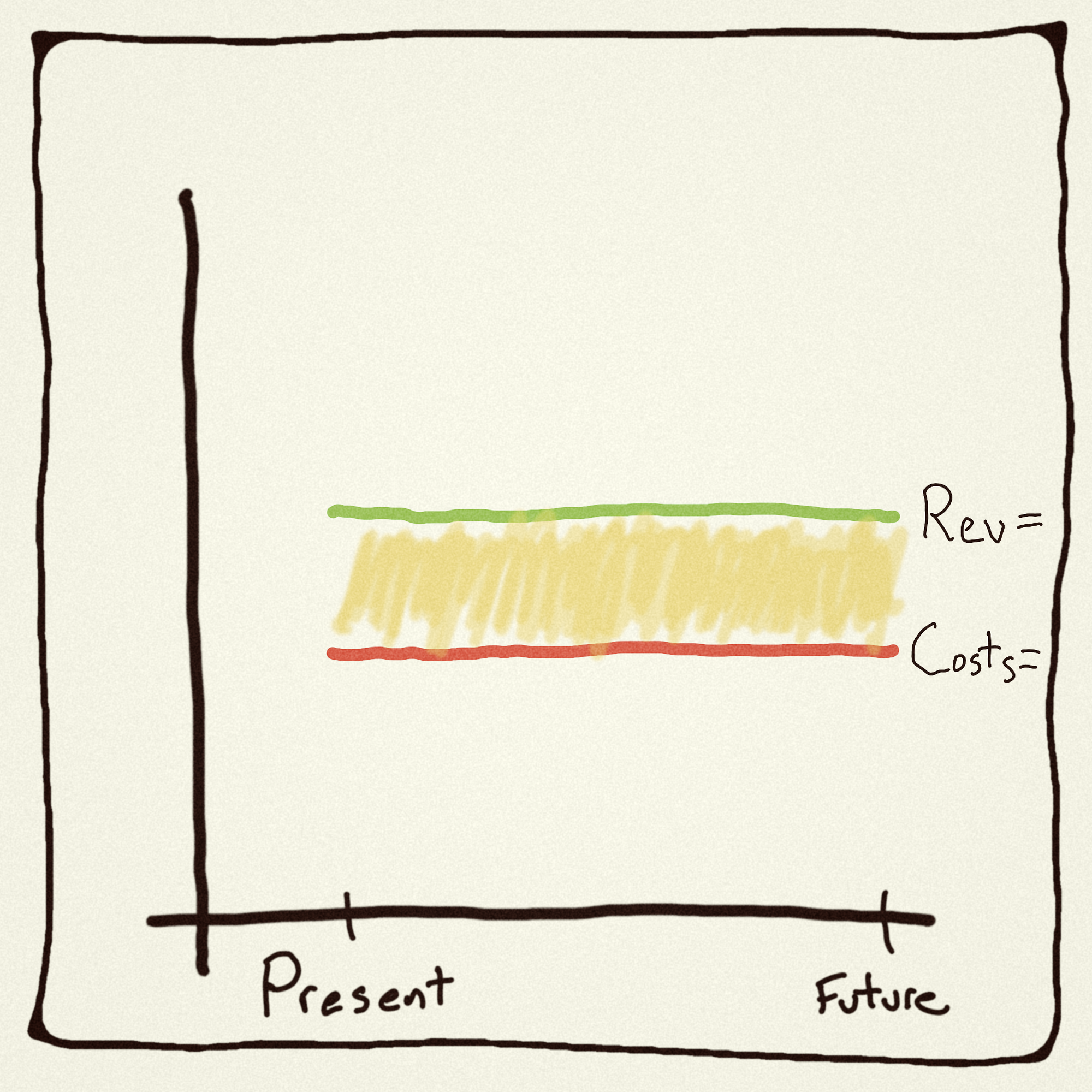
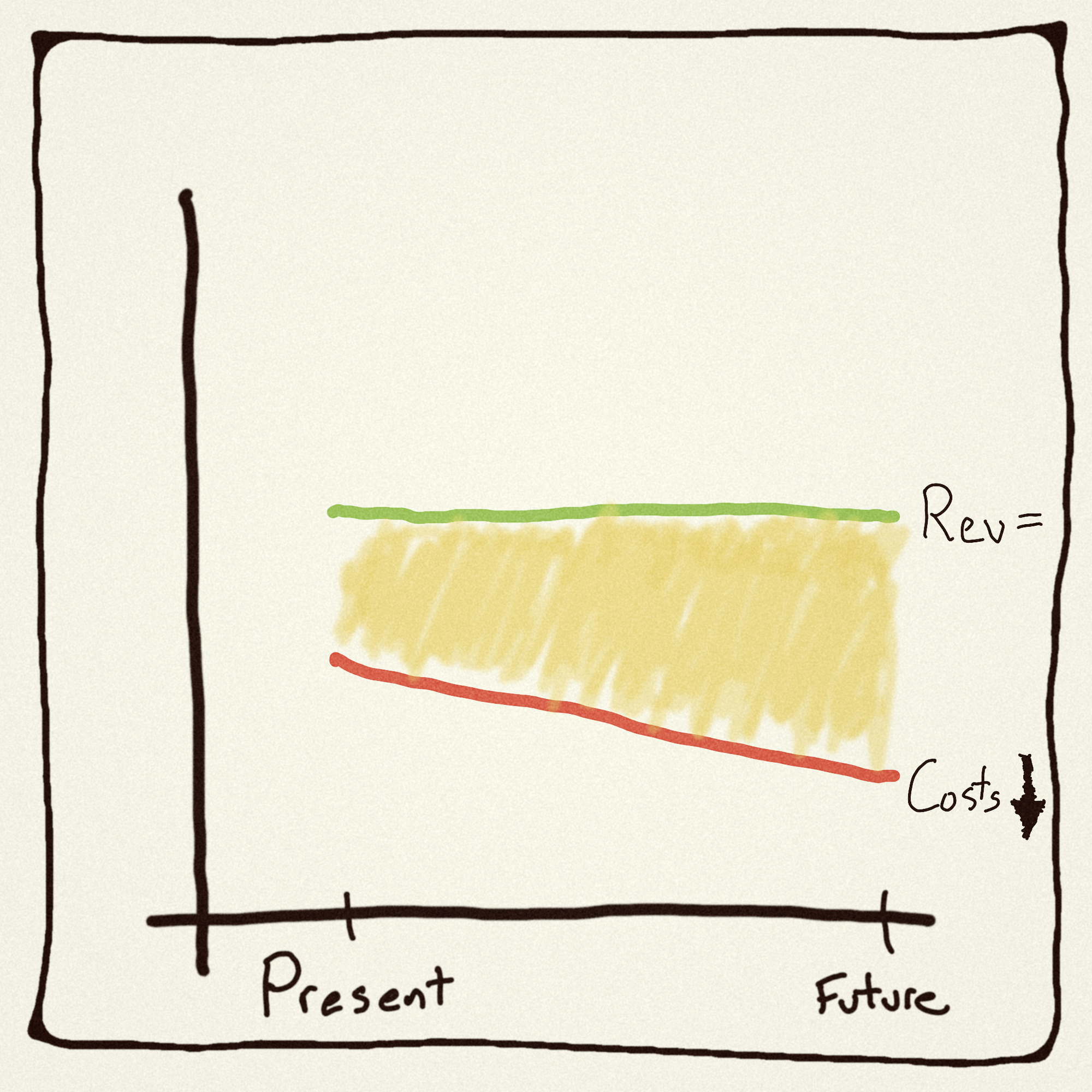
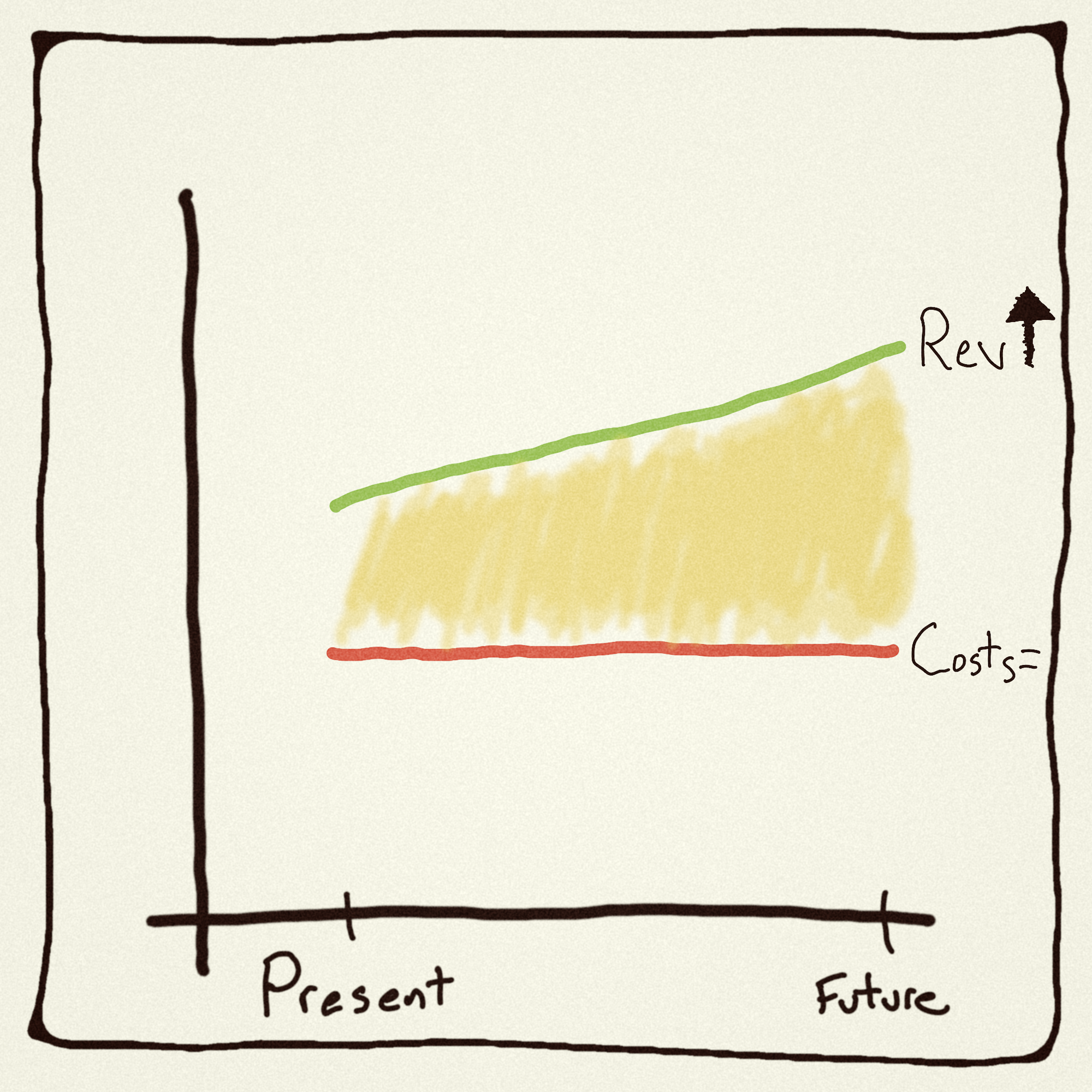
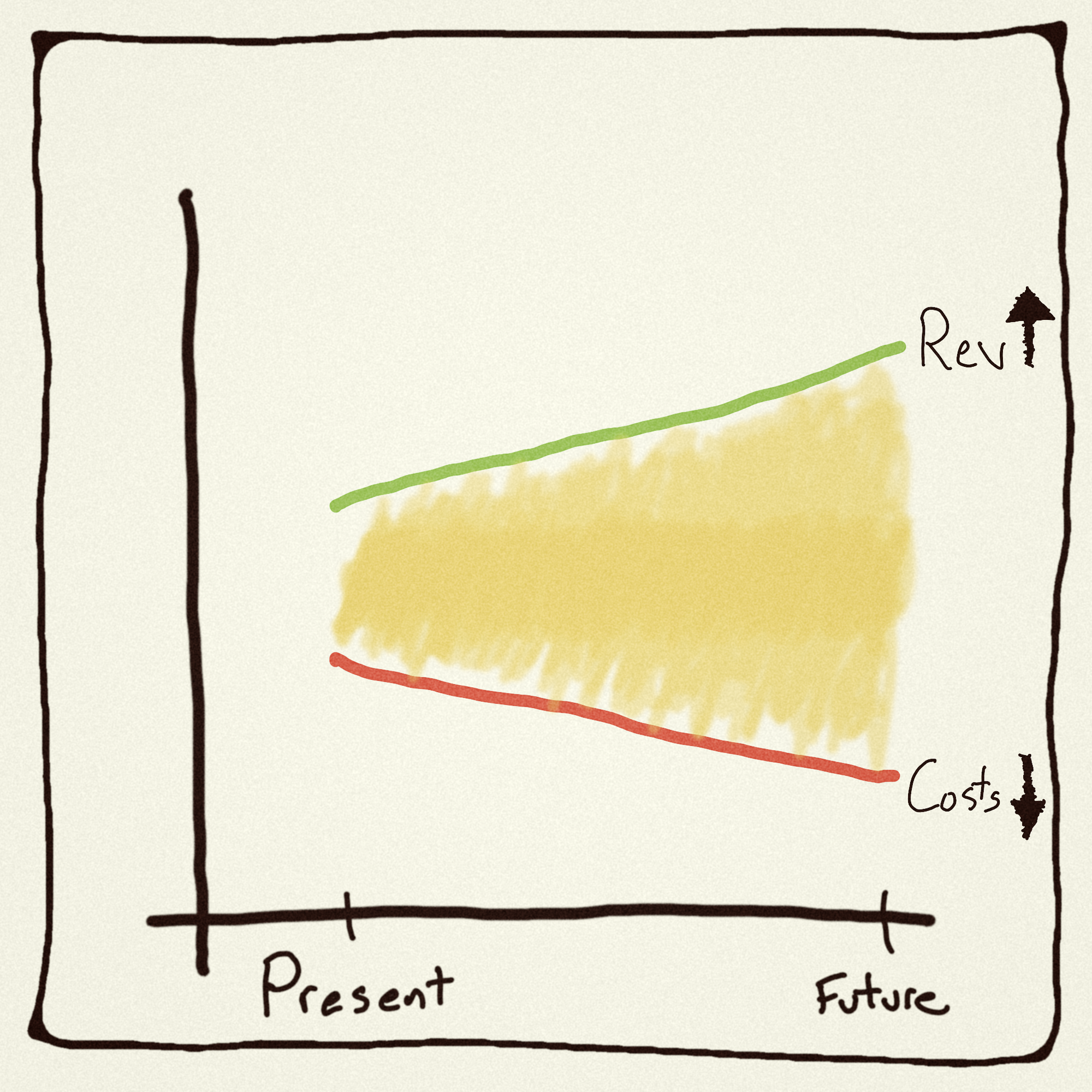
Revenue is good(for capitalists) but Profit is what capitalists are after. Profit is the new money that they make. Here are the four different examples of the ways that Profit are made in order of least lucrative to most lucrative, from a capitalist perspective:
How Profit Can Be Used Like A Tool
If we think about the examples I gave above and Profit is simply a tool, then we can start to see that Profit is a deployable action that anyone can take to accomplish something.
For example: when you grab a hammer, you do not intend to cook. You could stir a soup with a hammer but there are better tools for that. You use a hammer because you intend to hit objects with force to reshape them. Hammer a nail into a piece of wood, change the shape of a piece of metal, if you're Tony Soprano, smash a kneecap.
So if Profit is a tool, what is the intention?
The Purpose Of Profit As A Tool
It is to prioritize how capital is used, to generate as much new money as possible. A big hammer is used for hammering big nails, and a small hammer for hammering small nails. If you want to create the most new money, you need to deploy capital to the most profitable business.
So Profit is new money that capitalists want, so if we agree on the following statement:
- Profit is optimal when the gap between Revenue and costs is as large as possible
Then we can then ask the question:
How do we increase the gap? There are two parts to this formula:
- Revenue
- Costs
Let's talk about both of them.
Costs
The costs of selling a good encompass everything necessary to sell an item. A quick list looks like this:
- Advertising that product
- Paying rent for any land, building, and equipment necessary to produce the product
- Paying interest on loans necessary to buy equipment OR maintain operation cash-flows (some businesses go into the red and back into the green after selling all products manufactured), or maintain inventories.
- Materials necessary to create the product ie. plastic, paper, ink, metal, yarn, or any other commodity.
- Business critical tools like internet, telephones, software deemed necessary for either producing a product, maintaining inventory, managing sales pipelines.
- Employee equipment such as uniforms, cleaning supplies, safety equipment, laptops, etc, etc
These are just examples of the costs that go into a product. Oh you thought I was going to forget the one of the highest expenses to business?
- Wages for employees who sell or produce the product or provide the service that is sold as a product.
Human labor is usually the largest of these expenses.
Revenue
Revenue is simple. You take the number of items you generate and multiply them by the price you charge the people who buy it. Revenues can also be subscriptions and so on, but fundamentally, it is just the money made.
If Profit Is Your Tool, Then The World Is Looked At Through The Lens Of Profitability
Here we are at the crux of a contradiction.
Think of some things that aren't profitable. Generally they're public goods and services. For example housing the homeless or helping refugees establish themselves in a new country.
How does a government, or a business or an individual prioritize things that are not profitable when capitalism's main tool is profitability?
Profitability is how new money is made. Profit is Capitalism's hammer and the only things worth creating in this world are those things that generate the most Profit.
It isn't about "creating value", it is strictly about acquiring the highest Revenues possible for the lowest Costs possible. (if a business could deliver zero value and still get paid for it, it would. There's already a business sector that tries to get close to this: insurance.)
If we look at it from this lens, I think that a lot of things we see in the real world start to make sense. Boeing having quality issues with its planes because it has prioritized increasing Profits by increasing Revenues or reducing costs (take a guess which one of those leads to quality issues).
Off-shoring also starts to make sense. As I mentioned, humans are usually the most expensive cost to companies. So how do you reduce that cost? You hire cheaper labor, and that cheap labor is almost always in one of the developing economies. You might see it framed as bringing jobs to a region, and uplifting that economy. But it is first and foremost a cost reduction measure that allows businesses to generate some similar level of value at a reduced cost that comes at the expense of the worker's income (if they do the same job as someone who would have been paid more, shouldn't they have been paid that same amount?).
A typical argument here is: the cost savings are passed onto the consumer. I think we see with inflation that this isn't the case. The primary goal of cost savings is to increase Profit for shareholders and owners of the business.
Exiting This Cycle
Some might argue that Profit is a way to drive innovation and laptops wouldn't exist without Profit.
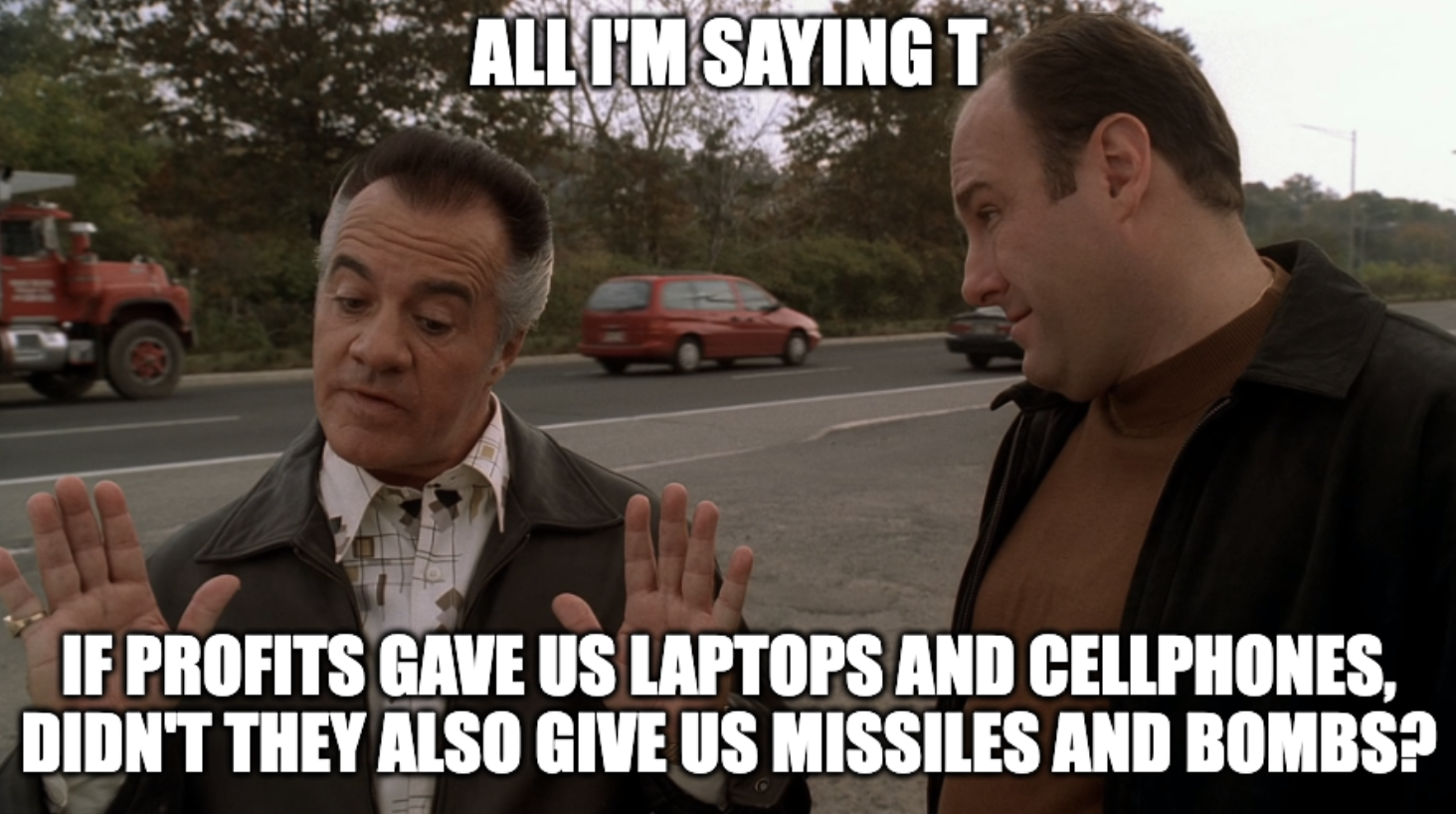
If you are trying to make soup you can make better soup probably with a tool other than a hammer. The way to exit this vicious cycle of profitability is to change the tool we use for our economy. If we choose the right tool by which we prioritize then we can manage our economy and our planet in a sustainable way.
A final thought I'll leave you all with: Many believe that capitalism can fix a lot of our societal problems. The question I would pose to you then is, can you see a world in which:
Peace is more profitable than war?
Housing the homeless is more profitable than homelessness?
Planet conservation is more profitable than planet exploitation?
I don't believe so, but I'm open to changing my mind.
I hope this helps highlight how predictable actions are when we understand the underlying mechanisms. Just look at the world through how much it can be profited from and I think it will all start to make sense.
[1]. A note for another post: Where does profit come from? In this post I talked about how profits can be created, but I think it's important to understand where that "new money" is really coming from. I Will link to it when I write it! I also think it's important to share that profit is theft.
If you have thoughts please share them in the comments! Or you can reach out to me on the the instagram account!

Proto-Contradiction Newsletter
Join the newsletter to receive the latest updates in your inbox.